What Is Penetrating Damp?
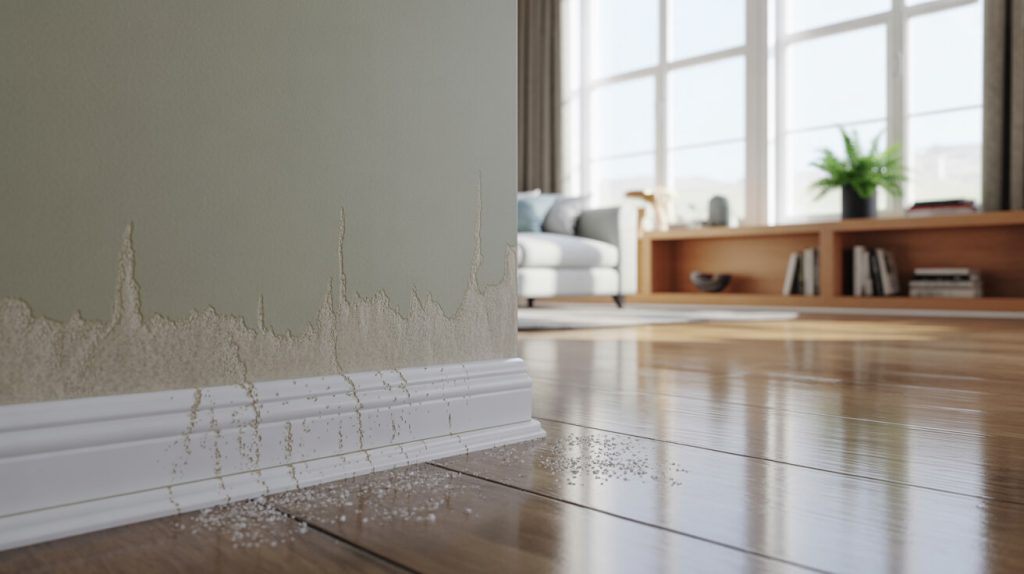
Penetrating damp occurs when water enters a property through a defect in the building's external fabric. Unlike rising damp — which travels upward from the ground — penetrating damp can appear anywhere: on external walls, under window sills, around chimney stacks, or on ceilings below a roof fault.
The key characteristic is that it is always caused by a specific, identifiable point of entry. Water is exploiting a crack, gap, or failure in the building envelope — and once that defect is found and repaired, the damp stops. This is why correct diagnosis matters so much.
Why Penetrating Damp Gets Worse Over Time
Small defects — a crack in render, a gap in pointing — allow water in gradually at first. Over time, freeze-thaw cycles widen the crack, saturated masonry loses its insulating properties, and internal damage accumulates. Addressing it early is far less expensive than leaving it.
Common Causes
Penetrating damp almost always has an identifiable cause in the building fabric. During a survey, we systematically check each of these:
Failed Pointing
Mortar between bricks degrades over decades. When it cracks or falls away, rainwater is driven into the wall. Common in exposed elevations or older properties.
🏠 Cracked Render
Hairline cracks in external render allow water to penetrate behind the coating — where it can't dry out, accelerating damp and eventually causing the render to blow.
Faulty Flashings
Lead flashings around chimney stacks, roof abutments, and dormer windows seal the junction between different building elements. When they fail, water runs down inside the wall.
🍂 Blocked Gutters & Downpipes
Overflow from blocked gutters saturates the wall face continuously. Even well-built walls absorb water under sustained pressure.
🪟 Window & Door Seals
Failed sealant around windows and doors creates an entry point, especially on weather-facing elevations. Water tracks down reveals and into the window reveals and plaster.
Porous Masonry
Some older brick types are more porous than modern materials. On exposed elevations, masonry alone can admit enough moisture to cause internal damp without any specific defect.
Signs of Penetrating Damp
Penetrating damp has a distinctive pattern that helps distinguish it from rising damp and condensation:
- Damp patches that appear or worsen during or after rain — the strongest indicator that water is entering from outside.
- Damp on upper walls or ceilings — rising damp can't reach this high; if it's above a metre it's either penetrating damp or a roof/plumbing issue.
- Staining localised to one specific area — beneath a window, beside a chimney breast, or in the corner of a room below a parapet.
- Tide marks that don't follow a horizontal pattern — penetrating damp runs down from the entry point, creating diagonal or vertical staining.
- Damp limited to one wall or one room — particularly a weather-facing external wall on the side of the property exposed to prevailing rain.
- Spalling or blowing brickwork — moisture trapped within masonry expands when it freezes, causing the brick face to flake and crumble.
Penetrating Damp is Often Misdiagnosed
Many contractors misidentify penetrating damp as condensation or rising damp because the internal symptoms can look similar. A surveyor who doesn't inspect the building exterior — gutters, pointing, render, flashings, and roof junctions — cannot reliably diagnose penetrating damp. Our surveys always include a full external inspection.
How We Diagnose Penetrating Damp
Full External Survey
We inspect every external elevation systematically — condition of pointing, render, flashings, gutters, downpipes, window reveals, sills, and roof junctions. This is where the fault almost always originates.
Internal Moisture Mapping
We use a calibrated moisture meter to map internal readings, establishing the extent of the affected area. The pattern of high readings helps confirm the source and severity.
Thermal Imaging (where required)
For complex or hidden ingress routes — particularly around flat roofs, parapets, and chimneys — thermal imaging can reveal moisture paths invisible to a moisture meter alone.
Written Report & Specification
You receive a clear written report naming the exact source of water entry, the internal damage caused, and a fixed-price specification detailing every repair required.
What Our Report Covers
Our penetrating damp survey report gives you a precise diagnosis and a clear specification for the contractor you appoint to carry out the repairs:
- Identification of the exact entry point — the specific defect allowing water in
- Moisture meter readings mapping the extent of internal damage
- Photographic evidence of all defects, externally and internally
- Clear description of the repair required for each defect (repointing, render repair, flashing replacement, gutter clearance, etc.)
- Guidance on drying-out timescales before internal replastering can begin
- Advice on what to look for when obtaining quotes from contractors
Why an Independent Survey Protects You
Penetrating damp is frequently misdiagnosed — and the wrong repair wastes money without solving the problem. Our survey pinpoints the exact defect so that any contractor you use is working from an accurate specification. Because we carry out no works ourselves, our diagnosis carries no commercial bias.
What Remedial Works Are Typically Required?
Treatment always starts with repairing the specific defect identified in our report. The remedial contractor you appoint would typically carry out one or more of the following:
Repointing
Failed mortar joints are raked out and repointed with an appropriate mortar mix — lime-based for older properties to maintain breathability, sand and cement for modern construction.
Render Repair & Waterproofing
Cracked or blown render is cut back and replaced — either with a standard system or a specialist flexible weather-resistant render for exposed elevations. A clear masonry waterproofer may also be applied to porous brickwork.
Flashing Repair & Replacement
Failed lead flashings around chimney stacks, roof abutments, and dormers are replaced using correct step and soaker details, sealed with appropriate mastic at all upstands.
Gutter & Drainage Clearance
Blocked or broken gutters and downpipes are cleared and repaired. Correctly functioning rainwater disposal is often the single most cost-effective fix for penetrating damp.
Internal Drying & Replastering
Once the external defect is resolved, the internal wall must dry out — typically 6–12 weeks — before being replastered with breathable materials and decorated.